
Monolithic: Digital Experiences with Generative AI.
A self-contained visual series that transports viewers to distant environments, each anchored by an animated monolith, built with custom-trained style and nature models.
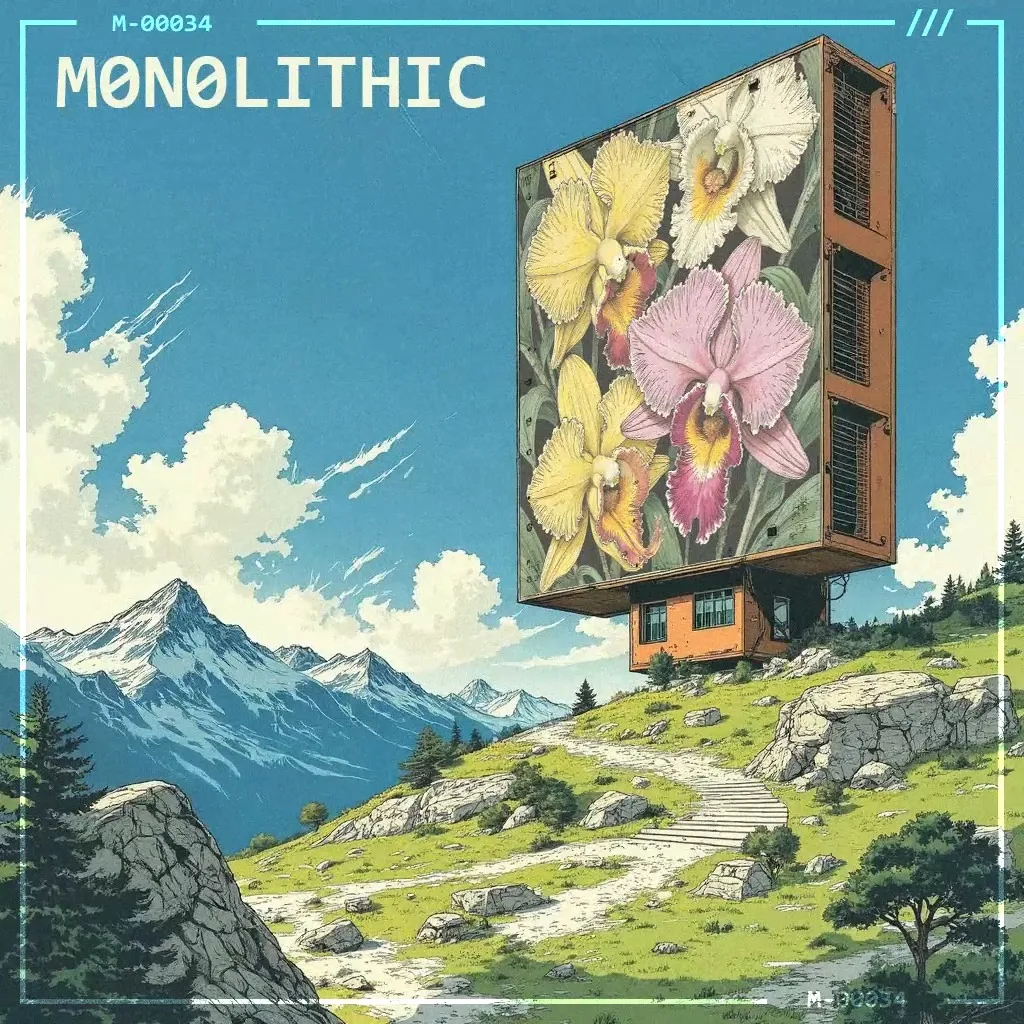
I had an idea back in December of 2024 and created a series called Retro Rooms. Retro Rooms was intended to create a sense of nostalgia and mix modern animated art with vintage style. From there, the ideas kept flowing. I wanted to create a short, self-contained experience that would transport viewers to a different place. That is when Monolithic was born.
The pieces take people to a distant place and immerse them in a specific environment. The monolith embedded into that environment adds an animated focal feature such as a flower or tree. The viewer can learn about that place and enjoy both visuals and audio at the same time. The Monolithic (or “M0N0LITHIC”) series uses an illustrative style and combines multiple models trained both for style and for nature.
Tap any piece to play it, sound on.
Generative AI applications and digital experiences.
I like to take the things I create with AI and ask, “What else could this be used for?” Digital experiences like this could become:
- Learning modules for schools
- Informational social media content
- Training simulations for workplace skills
- Digital tour guides of historical or natural sites
- Therapeutic experiences for stress relief
- Data visualizers
- Augmented reality user manuals
When I think about or propose a generative AI project, I take an “anything is possible” first approach, then focus on the creative and practical sides as well as the experiences that can be created. Sometimes, through a creative and iterative process, new ideas are born and versions of the original are repurposed, refined, and released.
Meaningful and functional generative AI.
Too often, generative AI is lumped into a text-in, text-out sort of system. There is so much more. Entire experiences can be driven by AI agents, whether conversational or not. Did someone finish watching a video? Did someone click a button on a certain page? Agents can take that feedback and act on it. Immersive experiences can combine diffusion models (image and video generation) and large language models to create a truly unique and cohesive experience.
Many highlight the time-saving benefits of generative AI, and assistants certainly deliver that. However, image and video projects still take significant effort if the output is to be truly unique. Simple outputs can be the result of clicking a few buttons. Unique experiences, consistent styles, and truly creative outcomes require time, planning, dedication, exploration, iteration, and skill. The hours once spent manually pushing pixels are now spent training models, fine-tuning datasets, choosing samplers and schedulers, and building custom ComfyUI workflows. I still find myself in Photoshop almost every day: far less time, but still a valuable tool in AI-assisted workflows. As generative AI continues to evolve, it mirrors traditional art forms in its need for learning, skill, and effort, just like every medium before it.
What type of experience would you create for your brand, product, or service?
More of the series lives at @boldcrowai.
Ready before
the agents arrive.
Tell us what you want to build, we respond within one business day.